A gutter system is sized and pitched, not just hung: roof area, roof pitch, local rain intensity, and downspout placement all determine whether water actually leaves the roofline or ends up in the basement. Free referral to a licensed local pro — one call, no obligation.
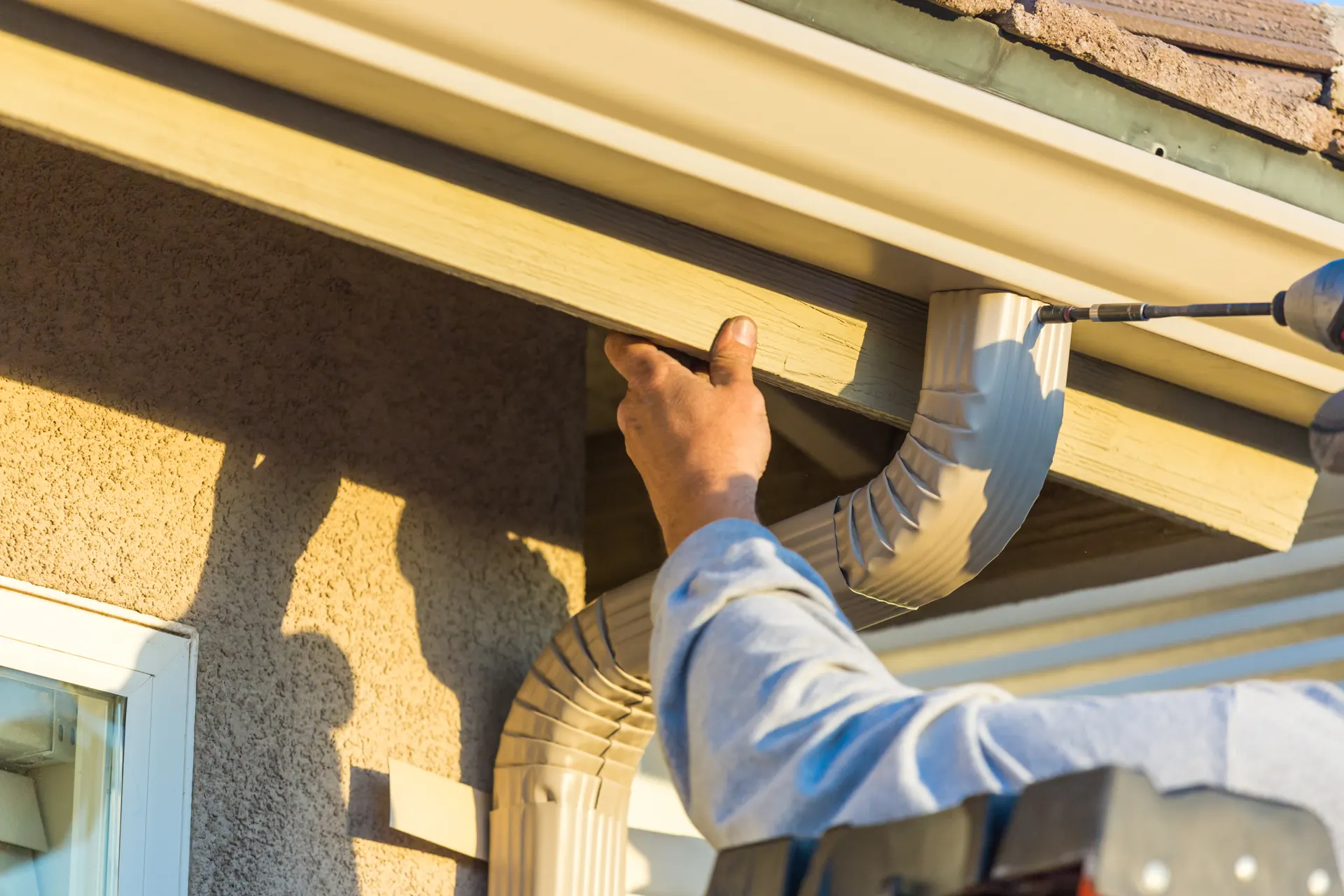
A gutter system is sized and pitched, not just hung: roof area, roof pitch, local rain intensity, and downspout placement all determine whether water actually leaves the roofline or ends up in the basement. Professional installation gets four things right that failed systems get wrong — slope (about a quarter inch of fall per 10 feet), hanger spacing, outlet count, and discharge distance from the foundation.
These are the specific failure modes licensed installers see most on this work.
Wrong pitch: too flat ponds water, too steep looks crooked and overruns the low end.
Too few downspouts: one outlet per 30–40 feet of run is the working rule; fewer means overflow at the far corner.
Spike-and-ferrule fastening (older method) works loose with freeze-thaw cycling and lets the gutter tip forward.
One call to (888) 650-1415 — tell us your ZIP code and what the gutters are doing.
We connect you with a licensed local gutter professional who covers your area.
The pro inspects and quotes the work. No obligation, and the referral costs you nothing.
Your local pro completes the job — installation, repair, or maintenance.
Isolated problems — one leaking seam, one loose hanger, a dented section — are repairs. Widespread rust-through, multiple separating seams, persistent overflow even when clean, or gutters pulling away along a whole run are replacement territory. A licensed local pro can tell you in a single walk-around which side of the line your system is on.
It depends on roof area, pitch, and how hard it rains where you live. Standard 5-inch K-style handles most homes; 6-inch is recommended for large or steep roofs and areas with intense downpours. Metal roofs shed water faster and usually warrant the bigger size.
A full tear-off and reinstall on an average single-family home takes one day. Larger homes, multiple stories, or fascia repairs can extend it to two.
After, ideally, or during — roofers can damage gutters during tear-off, and drip-edge flashing integrates best when both are coordinated. If you're doing both within a year, tell each contractor so the sequence is planned.
Removal and haul-away of the old system, inspection of fascia boards, new gutters pitched to the downspouts, hidden hangers, sized outlets, downspouts with elbows and extensions, and sealed end caps and miters.
The licensed installer sets pricing based on linear footage, material, stories, and fascia condition — the referral through GutterLinker is free and the quote carries no obligation.
Functioning gutters are a home-inspection line item; failed ones show up in inspection reports and buyer negotiations. New gutters primarily protect value — foundation, siding, and landscaping damage from failed gutters costs far more than the gutters.
Yes, weather permitting. Aluminum can be formed and hung in cold weather; sealants need appropriate cold-rated formulations. In snow country, many homeowners schedule installs for late fall specifically so the system is ready before melt season.
That's the exact problem GutterLinker solves: call (888) 650-1415, tell us your ZIP code, and we connect you with a licensed local pro who does gutter installation in your area. No searching, no ad-page roulette — the referral is free and the quote carries no obligation.
Free referral to a licensed local gutter pro. One call. No obligation.
Call (888) 650-1415 Now Gutter